

The Importance of Play Skills for Children
For children, play is not just a fun activity it plays a vital role in their development. Through play, children explore the world around them, learn essential life skills, and build the foundation for emotional, social, cognitive, and physical growth. Let’s delve into what play skills are, why they are vital for children, and how a psychologist can help nurture these skills.
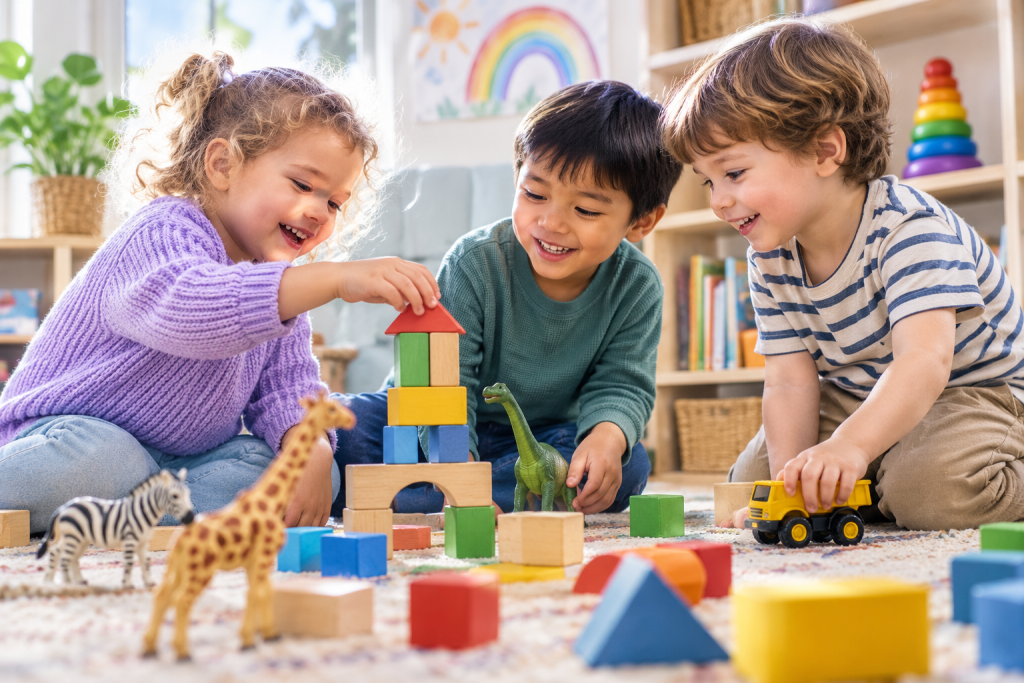
What Are Play Skills?
Play skills refer to a child’s ability to engage in activities by themselves or with others in a safe, friendly, and positive way. This allows them to engage in activities that foster creativity, problem-solving, communication, and collaboration. These skills can be categorised into different types of play:
Physical Play: Enhances physical fitness, coordination, and body awareness.in that complexity.
Exploratory Play: Involves discovering objects and their properties, which helps develop curiosity and sensory skills.
Imaginative Play: Includes pretend play, where children create scenarios and roles, enhancing their creativity and social understanding.
Social Play: Involves interaction with peers, teaching cooperation, conflict resolution, and empathy.
Constructive Play: Includes building or creating, which fosters planning, organisation, and motor skills.
Specific Play Skills and Signs of Difficulty
Within these categories a child will need to use specific play skills. When a child struggles with these skills it can have a significant impact on their ability to interact with others.
- Initiating Interactions: This skill involves approaching and engaging with peers or adults during play. If they struggle to initiate, a child may avoid approaching others, or do so in an unhelpful way such as interrupting.
Imaginative Play: Engaging in pretend play or creating scenarios fosters creativity and cognitive flexibility. A child may avoid imaginative play or struggle to create scenarios, which can indicate challenges with creativity or social understanding.
Sharing: The ability to share toys, materials, and space is crucial for cooperative play. If your child is engaged in frequent arguments, refusal to share, or possessive behaviour during play they may have difficulty with sharing.
Following Rules: Understanding and adhering to the rules of a game fosters discipline and fairness. A child may frequently ignore or struggle to follow rules, leading to frustration or exclusion from group play.
Perspective Taking: This involves seeing things from another person’s viewpoint, which enhances empathy and social awareness.
Sign of Difficulty: Limited ability to understand others’ feelings or intentions, resulting in misunderstandings during play.
Turn-Taking: Waiting and taking turns during group play or games promotes patience and cooperation. Children who struggle to take turns will appear impatient, interruptive, and tend to dominate play activities.
Problem-Solving: Finding solutions during play, such as resolving conflicts or completing a task, is essential for cognitive growth. As this skill develops children become frustrated when faced with challenges, giving up easily, or relying heavily on adults to solve problems.
Self-Regulation: Managing emotions and behaviours during play, such as staying calm when things don’t go as expected. It’s crucial that children learn to manage setbacks and enjoy games outside of winning.
Why Do Children Need Play Skills?
Social Development: Play teaches children how to share, take turns, negotiate, and build friendships. These interactions are essential for developing empathy and understanding social cues.
Emotional Growth: Through play, children learn to manage emotions, cope with frustration, and build resilience. Pretend play, in particular, allows children to process feelings and experiences in a safe environment.
Cognitive Skills: Activities like puzzles, games, and role-playing enhance problem-solving, memory, critical thinking, and decision-making abilities.
Physical Health: Active play contributes to physical fitness, improves coordination, and strengthens fine and gross motor skills. It also helps in establishing a lifelong habit of physical activity.
Language and Communication: Play offers opportunities to practice language skills, whether it’s through storytelling, role-playing, or interacting with peers. It also fosters listening and comprehension abilities.
Brain Development: Play stimulates neural connections in the brain, particularly in areas associated with problem-solving, emotional regulation, and creativity. Early play experiences can have long-term impacts on a child’s ability to learn and adapt.
How Can a Psychologist Help?
Psychologists play a crucial role in fostering and improving play skills in children, especially if there are developmental delays or behavioural challenges. We are able to identify gaps in play skills and used evidence-based approaches to help children express emotions, process experiences, and build skills. The therapy space allows children to practise these skills in a safe and calm environment, with direct 1:1 teaching and guidance. We can also provide support to parents to foster these skills with their children and have better play experiences in the home.
Practical Tips for Parents
Here are a few ways parents can support the development of play skills:
- Provide Opportunities: Provide a variety of toys and materials that encourage exploration and creativity. Items like building blocks, art supplies, and open-ended toys can stimulate development. Limiting screen time can also allow for more play opportunities.
- Join in the Fun: Engage in play with your child to model positive behaviours, introduce new ideas, and strengthen your bond. Children with lower play skills will need more support and intervention.
- Praise Efforts: Acknowledge and celebrate your child’s creativity, teamwork, and perseverance during play.
- Practice Specific Skills: Encourage activities that promote initiating interactions, sharing, following rules, perspective taking, turn-taking, problem-solving, and self-regulation. For example, board games can teach rule-following, while collaborative art projects foster sharing and teamwork.
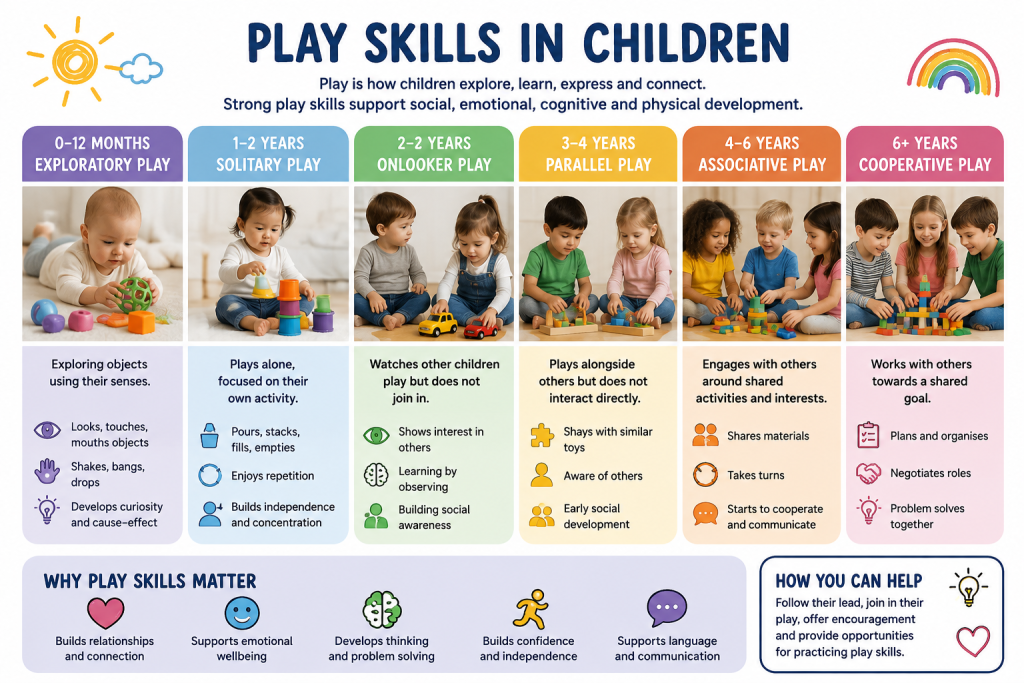
Play is not just an activity; it’s a vital component of childhood development that influences a child’s social, emotional, cognitive, and physical well-being. As a psychologist, I’m here to help children and their families recognise the value of play and ensure that every child has the tools they need to thrive.
Written by Provisional Psychologist Jessica Chapman – www.creatingchange.net.au
Psychology support in the Hills District, Western Sydney & Surrounds (including Rouse Hill, Bella Vista, Glenwood, Castle Hill, Kellyville, The Hawkesbury, Penrith Nepean, Blacktown, Epping, Ryde, Pennant Hills areas and surrounds)